A Business-Friendly Review of Happy Birthday Baby Card Redwork
As an embroidery designer working with many small businesses and craft entrepreneurs, I routinely evaluate machine embroidery designs for their suitability in commercial and branded merchandise. Today, I’m examining Happy Birthday Baby Card Redwork. This review isn’t about personal crafting; it’s about assessing this design’s potential as a professional asset for your brand, whether you run a bakery, a boutique, a creative studio, or a handmade shop.
First Impressions: Visual Personality for Branding
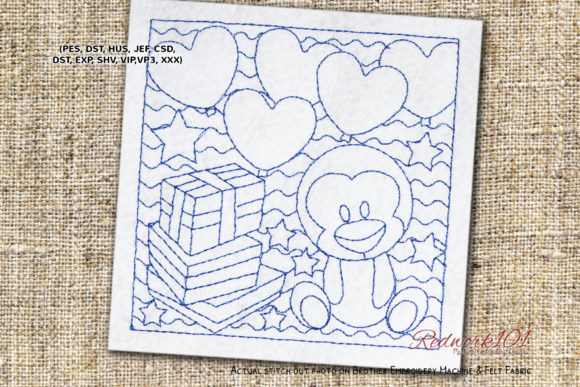
The immediate feel of Happy Birthday Baby Card Redwork leans toward a classic, handmade aesthetic, with a hint of playful charm. The “Redwork” style typically implies a simpler, often single-color outline approach, which can project a friendly, rustic, or timeless quality. For a business, this is a significant starting point. It feels approachable rather than overly corporate, which is perfect for brands built on personal connection, like a local café, a florist, or an Etsy store specializing in heartfelt gifts.
The title suggests a celebratory, card-like motif. This inherently positions the design for use in customer-facing, celebratory contexts. However, its value extends beyond decoration. The key question for a business owner is: can this visual personality translate into brand identity on uniforms, product labels, or merchandise?
Performance in Real Business Applications
Let’s translate the design into practical scenarios. Imagine you want to create embroidered staff aprons, branded tote bags for sale, or a special patch for customer birthday gifts. How does Happy Birthday Baby Card Redwork hold up?
As an Embroidered Patch or Product Label
This design has strong potential as a standalone embroidered patch. Its likely outline-based construction means it can be effective even at smaller sizes, making it suitable for a chest logo accent on a polo shirt or a subtle detail on a sleeve. For a product-based business—a pet brand, a bakery, or a handmade shop—this could serve as a charming add-on to product packaging or as a branded product label sewn onto a handmade item, instantly elevating the perceived value with a tactile, premium finish.
On Caps, Aprons, and Tote Bags
For cap embroidery, the design's clarity is crucial. You must check how it performs at the typical small scale of a cap front. The optional “Box Stitch” mentioned in the description is a critical note. As a designer, I advise clients that an outer border can frame a design nicely on a tote bag or apron, adding structure. However, if the color isn’t integral to the design, skipping it—as the description allows—can simplify production, reduce thread changes, and ensure the core “Happy Birthday Baby Card” message remains clean and legible on curved surfaces or textured fabrics like canvas.
Where to Use With Care: Critical Considerations
No design is universally perfect. For Happy Birthday Baby Card Redwork, its application requires thoughtful planning to maintain professionalism.
Firstly, tiny lettering is a common challenge. The “Happy Birthday Baby” text must be tested at your intended size—especially for a small patch or cap—to ensure stitch density doesn’t blur the words, compromising readability and brand presentation. Secondly, consider the fabric and context. On dark uniforms, a single-color “Redwork” might need to be stitched in a contrasting, lighter thread (like white or cream) to remain visible. For items needing frequent washing, like work shirts or aprons, a clean, dense outline stitch often holds up better than overly complex fill stitches, which is a potential advantage here.
Impact on Brand Identity and Customer Engagement
Integrating this design into your business merch isn’t just about adding an image; it’s about communicating values. A well-executed embroidered patch featuring Happy Birthday Baby Card Redwork on a staff apron signals attention to detail and a celebratory, customer-focused attitude. It builds customer trust through consistent, quality presentation.
For a handmade brand or Etsy seller, using this on a tote bag or as a product accent reinforces the handmade product story, linking your items to personal celebration and care. It can transform a simple product into a gift-ready item, boosting engagement and perceived value. Visual consistency is key; if your brand’s aesthetic is classic and warm, this design can be a harmonious asset alongside your other design assets.
Practical Designer Notes for Production
Before you commit this to production, follow these steps to ensure a flawless finished product.
- Test in Black and White First: Run a test embroidery file on a neutral fabric. This helps you evaluate pure form and stitch structure without color distracting you.
- Check Small Patch Size: Hoop it at the smallest size you plan to use (e.g., 2 inches). Verify text clarity and overall integrity.
- Review Thread Color Contrast: Decide on your final thread color(s) based on the garment color. The description notes color variability for the outer box; plan your palette for brand consistency.
- Test on Real Fabric: Don’t rely on the digital file alone. Stitch it on a sample of the actual fabric you’ll use—be it denim, cotton twill for aprons, or polyester for uniforms—using the proper stabilizer.
- Create a Printable Mockup for Client Approval: If you’re an embroidery shop producing for a client, a mockup showing the design on a cap or tote bag is essential for approval.
- Confirm Commercial Licensing: Before any business use, verify the licensing terms of the digital embroidery file. Ensure it covers commercial embroidery for the merchandise you intend to produce.
Finally, always compare Happy Birthday Baby Card Redwork beside your other brand elements. Does it feel cohesive? Does it communicate the right message for your small business merch? With careful testing and application, this design can move from a simple birthday motif to a genuine, professional brand accent on your custom apparel, event merch, and customer gifts.