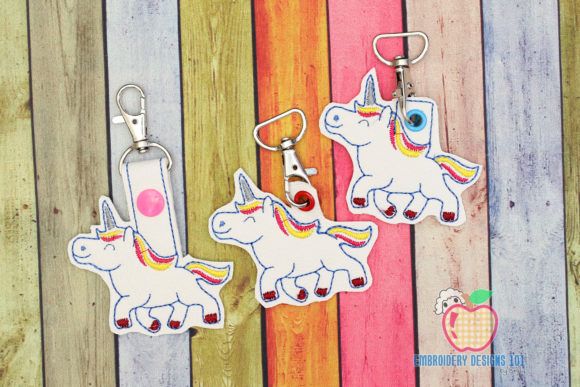
A Practical Review of the Beautiful Unicorn ITH Snaptab Keyfob
First Impressions: Whimsical, Functional, and Made for Makers
When a new embroidery design lands in your library, the first thing you notice is its mood. This Beautiful Unicorn ITH Snaptab Keyfob immediately feels whimsical and lighthearted—a classic fairy tales theme executed with a clean, modern layout. It’s not overly busy, which is a good sign. The detail level strikes a balance between decorative and practical; it has personality without being a stitching nightmare. Visually, it promises to be a cheerful, recognizable piece. My designer instinct says this isn’t just a cute graphic—it’s a functional component, a ready-made product core. That “in the hoop” nature means the design is built to become a finished object, not just a decoration. That shifts the entire perspective from “where do I put this?” to “what can I make with this?”
The Real-World Project Fit: From Gifts to Shop Merchandise
I’m picturing this on my worktable, part of a batch of holiday gifts. Imagine preparing a custom embroidered tote bag for a client, but instead of stitching the unicorn directly onto the bag, you create a polished keyfob as a matching accessory. That’s the smart application here. This design naturally belongs to projects where a small, finished item adds value. Think boutique product lines: keyfobs for a baby’s nursery gift set, attached to a personalized backpack, or as a standalone item in an Etsy listing for handmade keychains.
For small business owners and craft fair sellers, this is a quick-turn product. You can stitch it, assemble it in the hoop, and have a sale-ready piece. It fits perfectly into commercial embroidery for personalized gifts—birthdays, weddings, or just a cheerful token. The inclusion of three versions—Snap Tab, Eyelet, and Ribbon—is a practical win. It gives you manufacturing flexibility. The ribbon version could be a delicate gift tag or ornament, while the snap tab is robust for daily use. This adaptability increases its utility as a digital product for other makers.
Where Its Visual Appeal Translates to Customer Trust
When stitched out, a clean embroidery file like this affects buyer engagement directly. The whimsical theme, if stitched clearly, creates a sense of quality. On a sweatshirt’s zipper or a baby’s blanket tag, it becomes a delightful accent. For an apparel decorator, adding this as a custom accessory to a jacket or cap elevates the whole piece. The professionalism comes from the execution: crisp satin stitches outlining the unicorn, tidy fill stitches in the body. If those stitch densities are well-balanced, the final product feels substantial and well-made, not flimsy. That builds customer trust in your handmade presentation and can become a signature item for brand consistency in a craft business focused on fairy tales or fantasy themes.
Performance on the Machine: Considerations for Success
Since each design is noted as 4×4 hoop friendly, that’s a comfortable size for most home machines and a reliable starting point. In real-life embroidery situations, the key is translating that digital file into a physical object that lasts. On a tote bag’s strap or as a patch-like keyfob on a backpack, it needs to withstand handling. The areas that might need careful attention are the small, detailed corners of the unicorn’s outline and any tiny decorative accents. On textured fabrics like canvas for the keyfob itself, or if you’re attaching it to a stretchy fabric item, stabilizer choice is paramount. Always test on scrap fabric first—this is non-negotiable.
For dark fabric backgrounds, thread color contrast will define its appeal. A bright unicorn on a dark snap tab material will pop beautifully. Conversely, on light fabrics, you might want softer pastels. I’d advise checking the provided thread color list and perhaps doing a small sample in both light and dark scenarios. This design, being a central graphic, likely has dense stitch areas in the unicorn’s body. While that gives a rich look, on very thin fabric or layered garments, proper stabilization is critical to prevent puckering.
Caution Zones: Where to Apply Extra Care
This isn’t a design I’d immediately use on highly curved surfaces like caps unless it’s being made as a separate keyfob to attach. The in-the-hoop construction is for a flat, finished item. Also, because it’s destined for products that might need frequent washing—think keyfobs on gym bags or kids’ items—the assembly and material choices (snap tab, ribbon quality) are as important as the stitching. The embroidery itself must be secure. Inspect those small details after stitching: are the eyelet holes clean? Does the satin stitch border the snap tab area smoothly? A ragged edge here compromises the entire product’s value.
The Maker’s Checklist Before You Stitch
My practical notes for any embroidery designer, whether a hobbyist or a creative entrepreneur planning to sell:
- Run a test on your intended base material. Is the stitch density appropriate? Does it look clear?
- Review the three versions in your software. Which one aligns with your product vision—Snap Tab for durability, Ribbon for elegance, Eyelet for a classic keyring?
- Check thread colors against your fabric. Create a simple black and white mockup to see the contrast if you’re selling digital product previews.
- Confirm the licensing terms for this digital embroidery file. Can you use it for commercial embroidery projects, selling finished products in your small shop? Never assume.
- Consider the end product’s context. A unicorn keyfob might be perfect for nursery decor or a child’s gift, but how does it fit into a broader line of holiday embroidery or boutique branding? Its giftability is high, but its recognition is specific to a fairy tales audience.
Ultimately, the Beautiful Unicorn ITH Snaptab Keyfob design feels like a reliable, well-conceived asset. It’s not just a graphic; it’s a product blueprint. For makers looking to add a charming, functional item to their repertoire—whether for personalized gifts or as a steady craft business item—this design offers a solid foundation. Its success hinges on your careful execution: choosing the right version, pairing it with quality materials, and ensuring your machine embroidery translates the digital file into a tangible object that delights its recipient. That’s where the real design judgment lies, and this file seems poised to deliver.