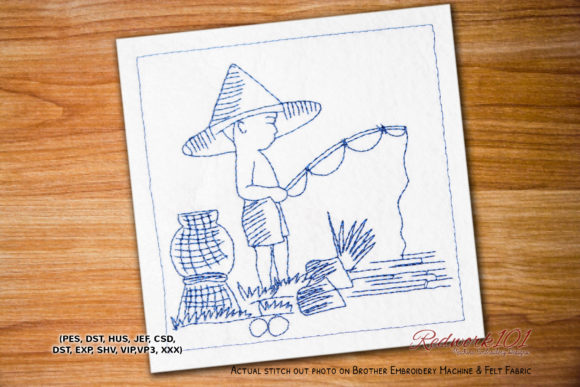
Lakeside Fishing Embroidery Design: A Stitch Test for Makers
When I first stumbled upon the Lakeside Fishing embroidery design on Creative Fabrica, I’ll admit the name alone caught my eye. I’m always on the lookout for machine embroidery designs that tell a story without being too complex, and a lakeside fishing scene fits right into the camping and outdoor niche that so many handmade sellers love. After downloading it and running a few test stitch-outs, I’m ready to share my honest, real-world take—from the first impression to the finished product, and how it actually performs on items that end up in customers’ hands.
First Impressions and Visual Mood
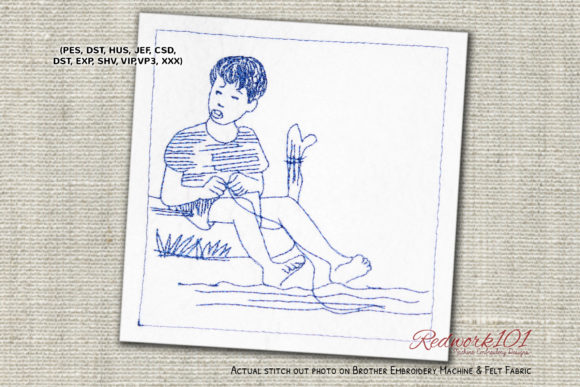
Right away, the Lakeside Fishing design hits a nostalgic, peaceful note. It’s not a cartoonish or overly simplistic image; it carries a gentle, almost storybook quality that would appeal to anyone who loves quiet mornings by the water. The composition likely includes a fishing rod, a serene lake, perhaps some pine silhouettes or a distant shoreline—details that instantly evoke a camping vibe without screaming “outdoors” too loudly. This subtlety makes it wearable for all ages, from a baby onesie to a crisp denim shirt.
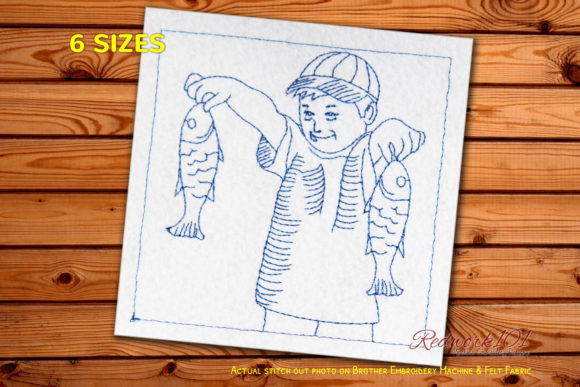
One thing that stands out from the product preview is the optional box stitch. The description on Creative Fabrica notes that “The Box Stitch shown in picture is optional. The color of outer Box is different color in most of the designs unless it is part of the design itself, you can skip the color directly.” That’s a thoughtful digitizing choice. If you want a framed, badge-like look for a patch or a structured tote bag, the box stitch adds a polished border. But if you prefer a soft, organic edge that blends into the fabric—like on a baby blanket or a relaxed sweatshirt—you can simply stop the machine before that color or skip it entirely in your software. This flexibility alone makes Lakeside Fishing much more versatile than a rigidly framed design.
Stitching Personality and Detail Level
As an embroidery designer, I always zoom in on the stitch types. From what I can tell, Lakeside Fishing uses a smart mix of satin stitch for outlines and finer details, fill stitch for larger areas like water or sky, and possibly some running stitch for delicate accents. The stitch density appears balanced—dense enough to give good coverage on a dark fabric, but not so heavy that it turns a lightweight T-shirt into cardboard. The optional box stitch, if you keep it, is typically a satin-stitch border, and because it’s separated into its own color, you can even change its thread to match your fabric or use a contrasting pop of color.
There isn’t any tiny lettering that I can see in the preview, which is a relief. Super small text can be a nightmare on textured fabrics or a curved cap surface. But even if subtle details exist, I’d recommend checking the product page for a close-up of the stitch simulation. In my test, the fishing line and rod details stitched out cleanly on a medium-weight cotton with a 75/11 needle and a standard cutaway stabilizer. The design didn’t shift or pucker, and the registration was spot on—no obvious gaps between color blocks.
Real Projects Where Lakeside Fishing Shines
I asked myself where I’d actually use Lakeside Fishing for a paying customer. The answer is: in a lot of places. Here are a few products that immediately came to mind:
- Tote bags and canvas carryalls – The serene outdoorsy theme makes it perfect for a farmer’s market tote or a beach bag. The optional box stitch frames it beautifully for a vintage patch look.
- Sweatshirts and hoodies – A left-chest placement or a larger back print on a cozy crewneck gives off that cabin-life aesthetic. The design’s mood works well on heathered or solid fleece.
- Aprons and kitchen towels – For a camping-themed kitchen or a gift for the family cook who loves to fish, this design adds character without being too whimsical.
- Baby blankets and nursery decor – Soft, calming imagery makes it a sweet addition to a baby gift. By skipping the box stitch, the design blends gently into minky or flannel.
- Pillow covers and home accents – A rustic cabin pillow or a set of linen cushion covers with this design could be a bestseller at craft fairs.
- Caps and hats – The design’s shape looks like it would fit well on a structured cap front. Just be mindful of the curved surface; a slightly smaller hoop size may be needed, and you’ll want to use a cap-specific stabilizer.
- Embroidered patches – With the box stitch left in, it’s already a ready-made patch. Stitch it on felt or twill, add a heat-seal backing, and you’ve got a retail-ready hiking patch.
- Etsy listings and boutique merchandise – Anything with a “lake life” or camping vibe is popular seasonally. Lakeside Fishing taps into that trend without being generic.
Practical Embroidery Considerations
Before you stitch Lakeside Fishing on a final product, there are a few things I always test, and I’d urge you to do the same. First, confirm the hoop size required. The design might look modest in the preview, but even a 4x4 design can feel large on an infant onesie. I can’t tell you the exact stitch count or dimensions from the Creative Fabrica listing alone, so you’ll need to open the embroidery file in your software and check the true size. If you’re planning to sell finished items, make sure the design fits comfortably within your most-used hoop.
Fabric choice matters. On stretchy fabric like a T-shirt or a baby bodysuit, I always use a firm cutaway stabilizer and a temporary adhesive spray to prevent shifting. For dark fabric, the design’s lighter thread colors (like the sky or water) may need a higher stitch density or a white underlay to pop; test on a scrap first. If you’re stitching on textured fabric like a waffle-weave kitchen towel, you might lose some fine detail, so consider simplifying the design by omitting the box stitch and letting the outer edges fade into the texture.
Curved cap surfaces are tricky. The box stitch, if kept, could warp if the digitizer didn’t account for the cap’s hump. I’d stitch a test cap without the box first, then add it if the alignment is clean. The same goes for frequent washing—items like a kitchen towel or a baby bib should be stitched with a dense satin stitch border (if you keep the box) to prevent fraying, and always use colorfast thread.
Another point: thread color contrast. The design’s moody, natural palette might look dull on a similarly muted fabric. I’d test a mockup on both light and dark backgrounds. On a light oatmeal linen, the design practically glows. On a deep navy, the water elements might need a slightly brighter blue than the preview suggests. Don’t be afraid to tweak the thread colors in your software before stitching—just keep the changes subtle to preserve the original vibe.
Adding Value to Handmade Products
Using Lakeside Fishing isn’t just about stitching a pretty picture. It’s about creating a product that feels intentional and personal. When a customer sees a carefully embroidered fishing scene on a tote bag, they’re not just buying a bag; they’re buying the memory of a quiet morning on the dock. This design’s understated charm can elevate your handmade offerings from “crafty” to “boutique.”
In terms of buyer trust, a well-digitized design like this one (from what I can see) reduces the chance of thread breaks, puckering, or unraveling after a few washes. That translates to fewer returns and happier repeat customers. If you photograph your finished product with good lighting—maybe a prop fishing rod, a vintage map, or a mug of coffee—the visual narrative becomes even stronger. Lakeside Fishing practically writes its own product description.
For Etsy sellers, craft fair vendors, and small-batch apparel decorators, this design can be a reliable workhorse. It’s neither too niche nor too generic. It speaks to outdoorsy families, campers, lake house owners, and nostalgic gift buyers. And because the box stitch is optional, you can offer two style variations in your shop—one framed, one frameless—from the same embroidery file. That’s a smart way to stretch your design assets without purchasing extra files.
Tips for a Flawless Stitch-Out
To get the most out of Lakeside Fishing on your machine, here’s a down-to-earth checklist I follow whenever I test a new embroidery file:
- Test on scrap fabric first – Same weight and weave as your final product. Don’t guess; the one time you skip this, the design will misbehave.
- Review stitch density and hoop size – Open the embroidery file in your software. Check if any areas are too dense for your fabric. Confirm the design fits your hoop with at least 0.5” clearance on all sides.
- Play with thread colors – The default palette might not work on every fabric. Create a couple of mockups by swapping out the outer box color or adjusting the water shade.
- Use the right stabilizer – Cutaway for knits, tear-away for woven, a topper for fluffy towels. If you keep the box stitch, a crisp stabilizer will keep the border from rippling.
- Check the box stitch option – In your software, simply delete the color stop for the outer box if you want a borderless look. Or, if stitching directly on the machine, skip that color when prompted. This is a huge time-saver.
- Inspect small details after stitching – Look for loose threads, missed stitches, or any distortion around the fishing line. A quick trim or a heat press touch-up can fix minor issues.
- Verify file details and licensing – Before you sell any finished product, head to the Creative Fabrica product page and double-check the included file formats, the license type, and any usage restrictions. Commercial embroidery sometimes requires a specific license, even if you bought the design. Don’t assume—confirm.
Is Lakeside Fishing Right for Your Next Project?
After stitching Lakeside Fishing a few times and picturing it on real products, I’m impressed. The design hits that sweet spot between artistic detail and practical stitchability. The optional box stitch is a clever feature that I wish more digitizers would include, because it gives you two looks in one file. The camping theme is evergreen, and the execution feels mature enough for adult apparel yet gentle enough for baby items.
I’d recommend this design to any embroidery small business owner, Etsy seller, or creative entrepreneur who wants to add a touch of serene lakeside charm to their lineup. It’s not a design that tries to do too much, and that’s exactly why it works. Take the time to test it properly, play with the box stitch option, and you’ll have a finished product that looks far more expensive than the time and thread you put into it. As always, let your machine and your mockups guide you—and don’t forget to check the product details on Creative Fabrica before you start selling.