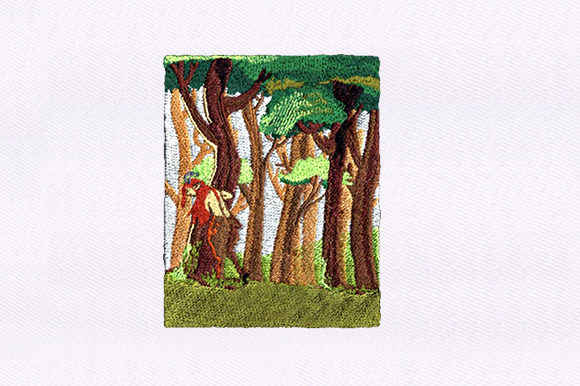
Satyr in a Forest Embroidery Design Review
From my perspective as an embroidery designer preparing products for a weekend craft fair booth, reviewing a new design is about balancing visual appeal with production practicality. The Satyr in a Forest Design immediately sparks a particular mood. Let’s break down where it fits and how it can perform as a craft fair product.
A Rustic and Mythical First Impression
When I look at the Satyr in a Forest Design, I think rustic and decorative. The subject evokes a sense of woodland mystery, a touch of folklore that feels premium and artistic. It’s not cute or minimalist; it’s a statement piece. This mood is crucial because it dictates which products it will elevate. On a crowded table of handmade items, this design can draw customers looking for something unique and story-driven, beyond simple florals or geometric patterns.
Product Placement: Where This Design Stands Out
My booth strategy involves a mix of high-impulse and higher-value items. Here’s my assessment of where Satyr in a Forest Design would work best.
Strong Focal Point Products
For designs with a narrative feel, I prefer using them as a large focal point on items where the artwork can be fully appreciated. A tote bag or a market bag is an excellent canvas. The rustic theme aligns perfectly with a natural linen or canvas bag, enhancing the handmade quality and perceived value. Similarly, a pillow cover, especially in a living room or reading nook context, would allow the design to shine as a decorative accent. For a craft fair product, having one or two beautifully embroidered pillow covers as booth samples can attract serious buyers.
Accent and Gift-Sized Items
The design might also work on smaller items, but careful scaling is key. A fabric pouch or a tea towel could be successful if the design retains clarity. On a kitchen towel, the rustic forest theme adds a unique, non-kitsch charm. An embroidered patch featuring this design could be a fantastic standalone product for crafters who want to apply it to their own gear, offering versatility. However, I always advise testing first.
Challenging Applications
Some products require extra consideration. Applying Satyr in a Forest Design to a cap, with its curved surface, demands a perfect hooping technique and potentially a reduced size that might compromise smaller details. An apron could work wonderfully, but the often-textured fabric of an apron needs the right stabilizer to ensure clean stitches on potentially thicker material.
Practical Production & Selling Considerations
Turning a digital embroidery file into profitable handmade products requires a realistic eye.
Ease of Understanding and Batch Production
At a glance, the theme is clear: a mythical creature in a natural setting. This instant recognition is good for quick customer engagement at a busy fair. Is the design repeatable for batch production? That depends heavily on the specific stitch count and density. Given the likely intricate details of a satyr and forest elements, I would anticipate areas of dense stitch density. This means longer stitch times and more thread consumption, which affects pricing and production speed. For an Etsy seller or small shop, producing a batch of ten tote bags might be manageable, but I wouldn’t plan for fifty without first stitching a test run.
Photography and Online Listings
For online sales, the design’s visual appeal is a strength. It photographs well as it’s not overly flat. Creating a printable mockup for an Etsy listing is helpful, but a real photograph of the embroidery on a product, like a pillow, is far more effective. The texture of the stitches and the play of thread colors against the fabric sells the handmade quality. Dark fabric could make a dramatic backdrop, but contrast is vital—details must not get lost.
Potential Pitfalls: Detail and Clarity
The description doesn’t specify a hoop size, which is a critical first step. Before any production, I must check the design’s recommended hoop size. Tiny details like the satyr’s features or fine tree branches might become muddy if stitched too small. Always test the design on scrap fabric first, mimicking the final product’s material. Textured towels or napped fabrics can obscure fine lines. There’s no mention of small lettering here, which is good, but any intricate line work needs a crisp stitch path and appropriate stabilizer.
Booth Impact and Customer Engagement
In a live selling environment, a design like this affects the booth’s overall strength.
It contributes to brand consistency if your shop leans toward mythical, natural, or premium decorative themes. Having a cohesive style across your table helps customers remember you. The Satyr in a Forest Design, displayed on a well-made product, increases perceived product value. It looks intentional and skilled, not mass-produced. It can spark conversations—customers might ask about the mythology or the artistry, which is a great engagement opportunity. Pairing it with simpler, lower-priced items creates a balanced product range.
Essential Designer Checklist Before Selling
Before I commit to producing any handmade product with this embroidery file for commercial sale, here is my non-negotiable list:
- Create at least one real mockup on the intended product (e.g., a tote bag). A digital preview is not enough.
- Test thread contrast on various fabric colors (light, dark, neutral) to ensure design clarity.
- Review the spacing and stitch paths in the actual embroidery files (ART, DST, PES, etc.) to spot any potential jump stitch issues.
- Inspect stitch density by stitching a sample; high density on thin fabrics can cause puckering.
- Use the right stabilizer for the chosen fabric type; a forest scene likely has satin stitches or fills that need good support.
- Compare fabric colors physically; how does the green of the forest look on beige versus gray?
- Confirm commercial licensing for the digital embroidery file. The provided formats (10O, ART, CND, DSB, DST, DSZ, EXP, HUS, JEF, PCS, PEC, PES, TAP, VIP, VP3, XXX) are comprehensive, but the license terms are not stated here. I must verify I can sell finished products before investing in materials.
Ultimately, the Satyr in a Forest Design is a promising candidate for craft fair and handmade market products. Its rustic, decorative mood offers a niche appeal that can command attention and a higher price point on well-chosen items like totes and pillows. However, its success hinges entirely on meticulous production testing. By treating it as a premium design and preparing accordingly, it can become a standout piece in your booth and a memorable item for your customers.