United States of America Redwork
There is something quietly confident about a redwork design done right. When I first pulled up the United States of America Redwork file, I immediately pictured it on a natural linen tea towel, the kind that hangs in a farmhouse kitchen or gets folded into a holiday gift basket. The design has a classic, almost nostalgic presence without feeling dated. It reads as patriotic but not loud, which is a harder balance to strike than most people realize.
What struck me first was the clean layout. The typography and outline work give it a hand-drawn quality that suits the redwork style perfectly. Redwork, by nature, relies on the simplicity of a single color doing all the heavy lifting. That means the shape and spacing have to be right from the start. There is no shading or gradient to hide behind. From what I can see, the United States of America Redwork design holds up well under that pressure. The lines are deliberate, and the overall composition feels balanced enough to work across a variety of products.
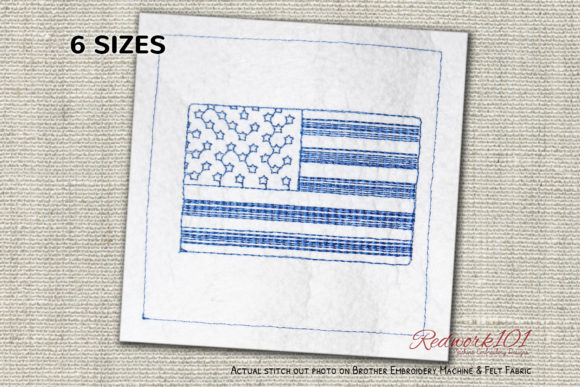
The product description mentions that the box stitch shown in the preview image is optional, and that the outer box color varies across most designs unless it is part of the design itself. I actually appreciate that flexibility. Not every project needs a bounding box, especially if you are stitching onto a garment where you want the design to blend more naturally into the fabric. Being able to skip that outer color or the box stitch entirely gives you more control over the finished look. I would still recommend testing it both ways on scrap fabric before committing to a final project, just to see which version feels more intentional for your specific item.
What kind of mood this design creates
The United States of America Redwork design lands somewhere between heritage craft and modern handmade. It does not scream for attention, and that is exactly why it works. When I imagine a customer picking up a product with this design stitched on it, I see them feeling a sense of warmth and familiarity. It is the kind of embroidery that makes someone stop and say, "Oh, that is really lovely," rather than, "Wow, look at all that stitching."
For an Independence Day product, that is a smart approach. A lot of patriotic designs lean heavily into bold graphics and heavy fill stitching. This one takes a quieter route, which makes it far more versatile. You are not limited to the Fourth of July. This design could easily live on a year-round product, something that appeals to people who love Americana style, rustic decor, or handmade gifts with a subtle national theme.
Where this design feels most at home
If I were planning a product line around this design, I would start with kitchen textiles. A flour sack towel with this redwork design stitched in a deep cranberry or classic barn red thread would be an easy seller at a craft fair or in an Etsy shop. The Embroidery category placement makes sense here because the design is built for stitch clarity, not dense coverage. That means it breathes well on woven fabrics and does not overwhelm the texture of the material.
Beyond towels, I can see this working beautifully on a canvas tote bag. Imagine a natural cotton tote with the redwork design centered on the front. It would feel like a boutique product, something a small shop could charge a premium for because the stitching looks intentional and design-forward. Pillow covers are another strong option, especially linen or cotton-linen blends. The design has enough presence to anchor a pillow face without cluttering it.
For apparel, I would lean toward lightweight woven shirts, denim jackets, or cotton aprons. I would be cautious with highly stretchy fabrics like thin jersey, simply because redwork tends to use running stitches and lighter satin lines that can warp slightly if the fabric shifts during stitching. A good stabilizer solves most of that, but it is worth testing on a scrap of the actual garment fabric before running a full batch.
Real project scenario: the boutique apron test
Let me walk you through a real scenario I kept thinking about while reviewing this design. I have a client who runs a small handmade kitchen goods brand. Every year around early summer, she starts preparing her Independence Day collection. She wanted something that felt handmade and nostalgic but could also be produced efficiently across multiple products. I pulled up the United States of America Redwork design and immediately thought of her signature linen apron.
I would stitch this design on the upper bib of the apron, centered neatly with the optional box stitch omitted. Without the box, the design feels more integrated into the fabric. The red thread against natural linen is a proven combination, and the simplicity of the redwork means the stitching time stays manageable. For a small business owner, time is money. A design that stitches out cleanly without excessive trims or thread changes is a practical asset.
I also considered how her customers would react. Her buyers tend to appreciate craftsmanship. They notice the little things. A design like this, executed well, signals that the maker cares about detail. It builds trust. When someone buys a handmade apron with this redwork design, they are not just buying a product. They are buying into a feeling of quality and tradition. That is the kind of embroidered patch or stitched accent that can define a brand's visual identity.
Practical considerations for small hoop sizes
One thing I always check when reviewing a design is how it scales down. Not every maker has a large hoop, and many entry-level machines max out at four by four inches. If the United States of America Redwork design has fine lettering or tightly spaced elements, shrinking it too much could cause those details to close up or become illegible. I would strongly recommend testing the design at the smallest hoop size you plan to use before listing any product that relies on a scaled-down version.
On the flip side, this design seems well-suited to medium and larger hoops where the stitch lines have room to breathe. A five-by-seven or six-by-ten hoop would give the redwork plenty of space to show off the linework. If you are stitching on a cap, pay attention to the curvature. Caps are tricky for any design with a strong horizontal layout, and redwork can look slightly off if the lettering arcs unexpectedly. A quick test stitch on a curved surface will tell you everything you need to know.
Thread color, fabric choices, and contrast
Redwork is, by definition, red thread on a light or natural background. But the specific shade of red you choose matters more than you might think. A bright cherry red gives a folk-art feel. A deep burgundy or brick red leans more sophisticated. I would test at least two or three thread colors on the exact fabric you plan to use. The United States of America Redwork design will read differently depending on that contrast.
Light fabrics are the obvious choice, but do not rule out medium tones. A soft chambray blue or a muted oatmeal linen could work beautifully with a darker red thread. The key is to avoid backgrounds that compete with the red for attention. Busy prints, dark fabrics, and heavily textured weaves can swallow the delicate lines of redwork. I always tell makers to think of redwork as a whisper, not a shout. You want the fabric to support the design, not fight it.
Stabilizer, washing, and durability notes
For a design like this, I typically use a cutaway stabilizer on apparel and a tearaway on woven goods like towels. The stitch density appears manageable, but without exact stitch count data, I would stitch a sample and check for any puckering or pulling. If the design has areas of dense satin stitch or layered running stitch, those sections may need extra stabilization on thinner fabrics.
Durability is another factor. If you are selling products that will be washed frequently, like kitchen towels or baby items, the stitching needs to hold up. Redwork designs with longer running stitches can sometimes snag if the thread catches on something. A quick wash test on your sample product will reveal any weak points. I would also check whether the design file specifies any recommended stabilizer or hoop size, and if not, reach out to the seller for guidance before committing to a large production run.
Commercial use and licensing awareness
This is an area where I see too many makers get tripped up. Before you stitch the United States of America Redwork design onto products you intend to sell, confirm the licensing terms. The product description does not clearly state whether commercial use is allowed, whether there are limits on the number of finished items you can sell, or whether the design can be used in digital embroidery file bundles you resell. Those details matter. A design that is licensed for personal use only will not protect you if you are running a craft business or selling on Etsy.
I always recommend keeping a folder of your licenses, receipts, and any correspondence with the designer. It is a small habit that can save you a headache later. If the terms are unclear, ask. Most designers are happy to clarify, and the professional ones will appreciate that you took the time to check.
How customers respond to this style
Over the years, I have noticed that customers react to redwork with a kind of emotional recognition. It reminds them of something handmade by a grandmother or spotted at a vintage market. That emotional connection is valuable. A product stitched with the United States of America Redwork design carries that same sense of heritage. It feels genuine. For a small shop product or a personalized gift, that authenticity can be the difference between a one-time sale and a repeat customer.
When I think about the Etsy seller or the craft fair vendor displaying this design, I picture it presented simply. Let the stitching speak. A plain linen background, a neatly folded towel, or a thoughtfully photographed tote bag. The design does not need much styling. Its strength is in its clarity and its quiet confidence. That is a rare quality in a market that often leans toward the overly busy.
Final practical checklist before you stitch
Here is a short list of things I would personally do before using the United States of America Redwork design in a real project:
- Test the design on the exact fabric you plan to sell, including the same thread color and stabilizer combination.
- Compare the stitched result with and without the optional box stitch to see which version suits your product better.
- Check the design at multiple hoop sizes to confirm that small details remain clear and legible.
- Wash the test piece at least once to evaluate durability, especially for items like towels or apparel.
- Review the licensing terms to confirm whether commercial use, finished product sales, or digital redistribution are permitted.
- Inspect the stitch density on curved or textured surfaces if you plan to use the design on caps, bags, or irregular items.
- Take a photo of the stitched sample in natural light to see how the design will appear in your product listings or printable mockup previews.
Is this design worth your time?
For makers who appreciate classic machine embroidery design work with a timeless feel, the United States of America Redwork design is a strong candidate. It fits neatly into the Independence Day category without being limited to a single holiday. It offers flexibility in how you present it, thanks to the optional box stitch. And it brings a level of handmade charm that appeals to customers looking for something with heart.
I would not recommend it for projects that demand high-impact visual punch or heavy coverage. That is not what redwork does. But if you are building a brand around thoughtful, quality-driven handmade product lines, this design earns its place in your library. Treat it with care, test it properly, and it will reward you with a finished look that feels both professional and personal.
In a market flooded with overly complex designs, the simplicity of a well-executed redwork piece stands out. The United States of America Redwork design understands that. It does not try to be everything. It just tries to be good at what it is, and for the right project, that is more than enough.